
7 Practical AI Agent Use Cases for Work in 2026
AI agents are changing how people use software in 2026, but the most useful changes are more practical than the most dramatic headlines suggest. Instead of simply producing a chat response, an agent can be designed to work through a multi-step task, use approved tools, keep track of progress and ask for human approval when a decision has higher impact.

That does not make an AI agent a fully independent digital employee, and it does not mean every workflow should become autonomous. The strongest use cases combine automation with clear permissions, reliable data, logging and human review.
This article is deliberately use-case focused: it shows seven kinds of work where agent-style systems can help and the control points each use case needs. If you are choosing a framework, see our agent platforms guide; if you are planning a production rollout, read our agent adoption and governance guide.
Evidence and Scope
This article is an editorial technology guide based on publicly available documentation, research and current industry practices. Examples describe capabilities and workflow patterns, not guaranteed business outcomes. Results depend on the model, tools, data quality, permissions, implementation and human review.
Organizations adopting AI should also consider risk management. The U.S. National Institute of Standards and Technology provides the AI Risk Management Framework, which is a useful reference for thinking about governance, measurement and responsible deployment.
1. Automating Repetitive Workflow Steps
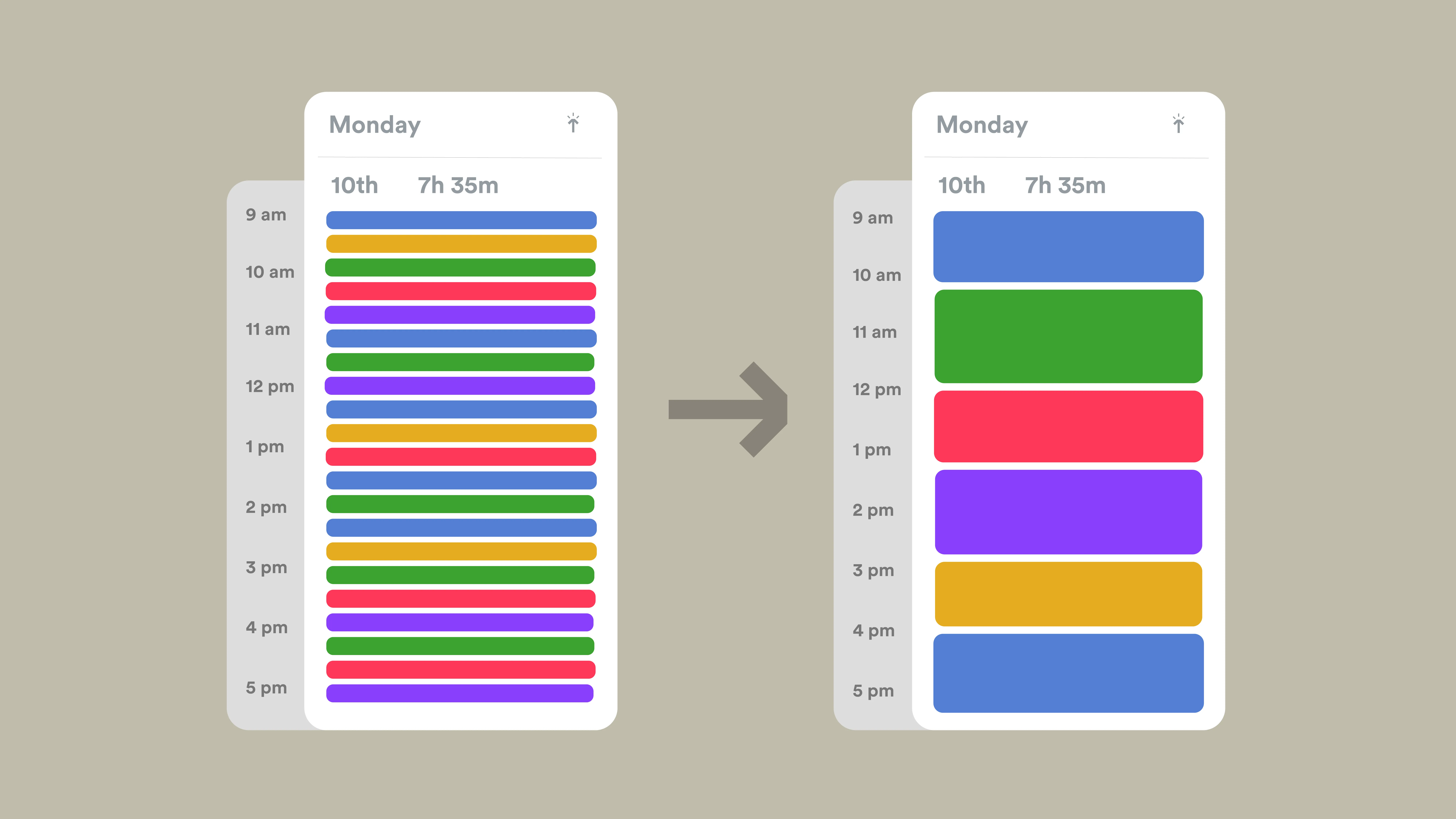
The clearest role for AI agents is connecting several repetitive steps into one controlled workflow. Traditional automation is excellent when every rule is known in advance. Agents become useful when the process also includes unstructured text, documents or decisions that need some interpretation.
Examples of suitable tasks
- Classifying incoming requests.
- Extracting information from documents.
- Preparing a first draft of a routine response.
- Creating tasks from meeting notes.
- Collecting information from approved sources.
- Updating a project system after human approval.
A good implementation does not ask the model to improvise everything. Deterministic actions such as moving a file, checking whether a field exists or sending a standard notification are often better handled by normal code. AI should be used where language or interpretation adds value.
How to start safely
Choose one workflow that happens frequently and has an obvious correct outcome. Document the current steps, identify which actions are reversible and keep a human checkpoint before anything that affects customers, money, permissions or important records.
2. Helping Teams Research and Organize Information
Research is a natural agent use case because it often involves several steps: defining the question, finding information, comparing sources, extracting relevant details and organizing the result. An agent can reduce the mechanical work while a person remains responsible for judging source quality and conclusions.
A reliable research pattern
- Define the question and scope.
- Prefer primary or authoritative sources.
- Collect source links with the notes.
- Separate verified facts from interpretation.
- Flag conflicting information.
- Have a person review the important claims.
This matters because language models can produce confident but incorrect information. An agent should not turn uncertainty into a fabricated citation simply to complete a task.
For a practical approach to source verification, see our AI research workflow guide.
3. Supporting Software Development

Software teams use AI for code explanation, test generation, debugging, documentation, refactoring suggestions and implementation assistance. Agent-style systems can go further by inspecting a repository, editing files, running approved commands and checking test results.
OpenAI’s updated Agents SDK, for example, describes agent infrastructure that can work across files and tools in controlled sandbox environments. The important word is controlled: access and execution boundaries are part of the engineering problem.
AI does not replace normal engineering controls
- Use version control.
- Review code changes.
- Run automated tests.
- Scan dependencies.
- Keep secrets out of prompts and logs.
- Use separate development and production environments.
- Require approval for risky commands.
Generated code can look convincing while still containing a logic error, unsafe dependency or missing edge case. The benefit comes from reducing routine effort, not from skipping review.
4. Improving Customer-Support Workflows
Customer support is another area where agents can connect language understanding with business systems. A well-designed agent can identify the type of request, retrieve approved knowledge, prepare a response and collect the information a human needs to resolve the case.
Some organizations may allow low-risk actions to happen automatically, but the level of autonomy should match the impact.
Useful support boundaries
| Action | Suggested control |
|---|---|
| Summarize a ticket | Can often be automated |
| Suggest a help article | Automated with source verification |
| Draft a reply | Human review for sensitive cases |
| Issue a large refund | Human approval |
| Change account security | Strong verification and approval |
Instead of advertising a universal “percentage of tickets solved,” evaluate your own workflow. Track accuracy, escalation rate, customer satisfaction, correction time and the number of cases in which the agent cannot safely proceed.
5. Turning Meetings Into Actionable Work
Meeting automation is useful because the raw information already exists in a transcript, recording or notes. AI can help summarize decisions, identify action items and format a follow-up.
The agent becomes more valuable when it can move approved action items into a project tool or calendar, but this should be done carefully. A transcript can misidentify a speaker or misunderstand a tentative idea as a final decision.
A safer meeting workflow
- Create a transcript with participant consent where required.
- Generate a draft summary.
- Separate decisions from discussion points.
- Review owners and deadlines.
- Approve the action list.
- Only then create tasks or calendar items.
Our AI meeting notes guide covers this workflow in more detail.
6. Coordinating Work Across Multiple Business Tools
Many business processes are slow because information has to move between email, forms, spreadsheets, CRMs, calendars and project-management tools. An agent can provide a natural-language layer over these systems, but only if permissions and data boundaries are designed correctly.
Least privilege should be the default
If an agent only needs to read a spreadsheet, it should not receive permission to delete it. If it prepares a CRM update for review, it may not need write access until the approval step. Narrow permissions reduce the damage that a mistaken instruction or unexpected model behavior can cause.
Keep logs for significant actions. A team should be able to determine what the agent was asked to do, what tools it used, which records changed and whether a human approved the action.
7. Changing the Human Role From Execution to Supervision
The most important workplace change may be a shift in where people spend attention. When repetitive execution can be delegated, more human effort can go into setting objectives, evaluating quality, resolving unusual cases and making trade-offs.
This does not mean judgment becomes less important. It becomes more important because an automated system can act faster and across more information than a person performing one manual step at a time.
Skills that become more valuable
- Writing clear goals and constraints.
- Recognizing weak assumptions.
- Evaluating evidence.
- Designing reliable processes.
- Understanding data permissions.
- Knowing when automation should stop.
- Explaining decisions to other people.
An employee does not need to become a machine-learning engineer to work effectively with agents. Process understanding and critical thinking are often more important.
AI Agents vs Traditional Automation
| Traditional automation | Agent-style automation |
|---|---|
| Best for fixed, predictable rules | Useful when language or flexible interpretation is required |
| Highly deterministic | Can vary and requires evaluation |
| Usually easier to test exhaustively | Needs broader scenario and edge-case testing |
| Lower ambiguity | Can handle unstructured inputs |
| Often cheaper for simple tasks | Worth using when AI adds meaningful value |
The best system often combines both. Use normal automation for the predictable parts and an agent only where flexible reasoning or language processing is needed.
How to Test an Agent Before Production
A successful demo is not enough. Build a test set that includes normal cases, missing fields, conflicting instructions, tool errors and unusual inputs.
Ask these questions
- Does the agent stop when required information is missing?
- Does it invent data when a tool fails?
- Can it accidentally act on the wrong record?
- Are high-impact actions approval-gated?
- Can you reconstruct what happened from logs?
- What happens when the model service is unavailable?
Measure total human effort. If employees spend more time correcting the automated output than they previously spent on the original task, the workflow is not yet delivering value.
Security and Privacy Considerations
An agent with tool access can see or change more data than a normal chatbot, so security controls should become stronger as autonomy increases.
- Use approved accounts and services.
- Store credentials in proper secret-management systems.
- Do not put passwords or API keys into ordinary prompts.
- Limit access by role and purpose.
- Review third-party data policies.
- Protect logs that may contain sensitive information.
- Monitor unusual actions.
The CISA Secure Our World resources provide practical security guidance that remains relevant when AI is added to normal business systems.
A Practical Adoption Checklist
- Choose one measurable workflow.
- Document the current process.
- Remove unnecessary steps before automating.
- Identify data and permission requirements.
- Keep high-impact actions behind approval.
- Test normal and failure cases.
- Track quality and correction effort.
- Keep an audit trail.
- Train users on appropriate data handling.
- Expand autonomy only after results are reliable.
Frequently Asked Questions
What is an AI agent?
An AI agent is a software system designed to pursue a task through multiple steps, often using tools or external services. The exact level of autonomy depends on how the system is built and what permissions it receives.
Are AI agents replacing employees?
Some tasks can be automated, but job impact varies by role and organization. A more accurate near-term description is that agents are changing how work is divided between people and software. Human review remains important for complex and high-impact decisions.
Do AI agents guarantee productivity gains?
No. Benefits depend on process design, data quality, model behavior, tool reliability and the amount of correction required. Measure your own workflow rather than relying on a universal ROI claim.
Do I need coding skills to use agents?
Not always. Visual automation tools can support agent-style workflows, while developers can use frameworks and SDKs for deeper control. The right option depends on complexity and risk.
Conclusion
AI agents are changing work in 2026 by connecting language models with tools and multi-step processes. The most useful applications are not the ones with the most autonomy. They are the ones that reduce repetitive effort while remaining understandable, measurable and safe.
Start with a narrow task, keep reliable human checkpoints, test failure cases and expand gradually. For a deeper look at platforms, see our AI agent tools guide, and for everyday workflows see our AI productivity tools guide.